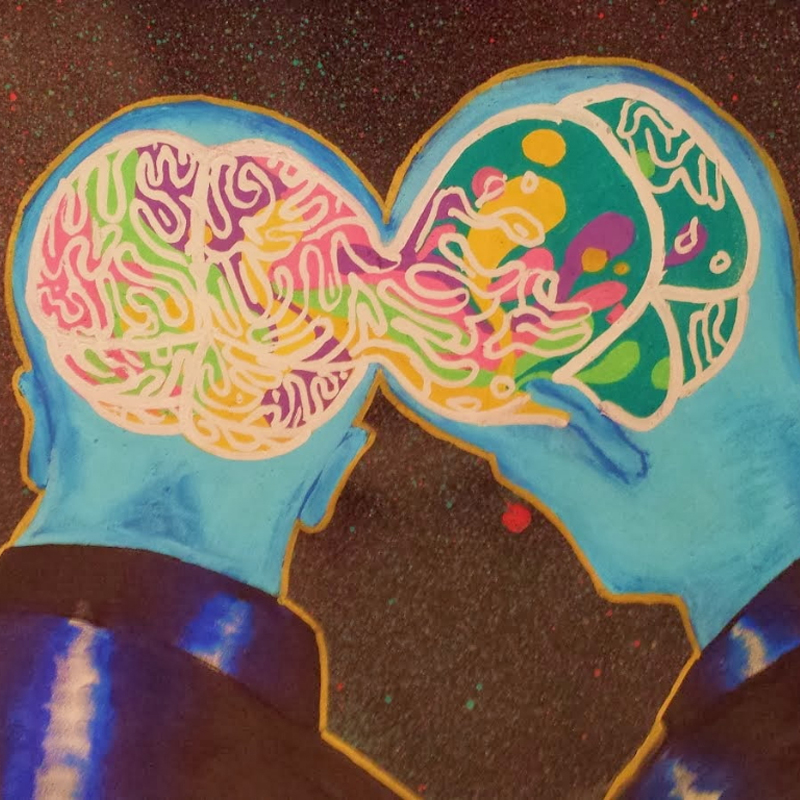
When people think of schizophrenia, they usually think of hallucinations or delusions. But for many families, the first thing they actually notice is something harder to name: the way a loved one talks begins to change. Sentences wander. Answers stop connecting to questions. Conversations that used to flow now feel like hard work for everyone involved.
Clinicians call this group of changes formal thought disorder — disturbances not in what a person believes, but in how thought itself is organised and expressed through language. It is one of the most studied aspects of schizophrenia, and it was the subject of my own postgraduate research.
What does it look like in practice?
Some of the patterns we assess for in a clinical interview include:
- Derailment — ideas slipping off track, so speech drifts from topic to topic with only loose connections.
- Tangentiality — answers that set off in the direction of the question but never quite arrive at it.
- Poverty of speech or content — very brief replies, or full sentences that carry surprisingly little information.
- Neologisms and word approximations — invented words, or ordinary words used in private, idiosyncratic ways.
- Loss of goal — losing the thread of what one set out to say midway through saying it.
Everyone's speech does some of these things occasionally — when we're exhausted, anxious, or distracted. What distinguishes thought disorder is its persistence, its degree, and the way it interferes with everyday communication.
"Thought disorder is not a person being difficult or evasive. It is a symptom — as real as a fever — and it deserves the same patience and treatment."
Acute versus chronic illness
One of the most consistent observations — in the research literature and in clinical practice — is that thought and language disturbances look different at different stages of illness. In acute episodes, "positive" features tend to dominate: speech may be pressured, derailed, or crowded with loose associations. In chronic illness, the picture often shifts toward "negative" features — speech becomes sparse, slowed, and emptier of content, which families sometimes misread as withdrawal or disinterest.
This distinction matters because the two patterns respond differently to treatment and call for different kinds of support. Pressured, disorganised speech in an acute phase often improves substantially as the episode is brought under control. The quieter, negative pattern of chronic illness responds more gradually — and here, structured routines, social engagement, and life-skills training play as important a role as medication.
Why this matters for families
Understanding thought disorder changes how families communicate, usually for the better. A few things that genuinely help:
- Keep sentences short and questions concrete. One idea at a time.
- Allow extra time. Don't rush to fill silences.
- Gently restate rather than correct: "So what I'm hearing is…"
- Never mock or mimic disorganised speech — shame worsens withdrawal.
And a note of hope that the evidence firmly supports: with consistent treatment, most people with schizophrenia see meaningful improvement in their ability to communicate and connect. Early, sustained care makes the biggest difference — which is why we place so much emphasis on making that first consultation easy to reach.
Key takeaways
- Thought disorder affects how thinking is organised and expressed — it is a symptom, not a character trait.
- Acute illness tends toward disorganised, pressured speech; chronic illness toward sparse, slowed speech.
- Both patterns are treatable, and family communication style measurably helps.
- If speech changes persist for more than a couple of weeks, seek a professional assessment.